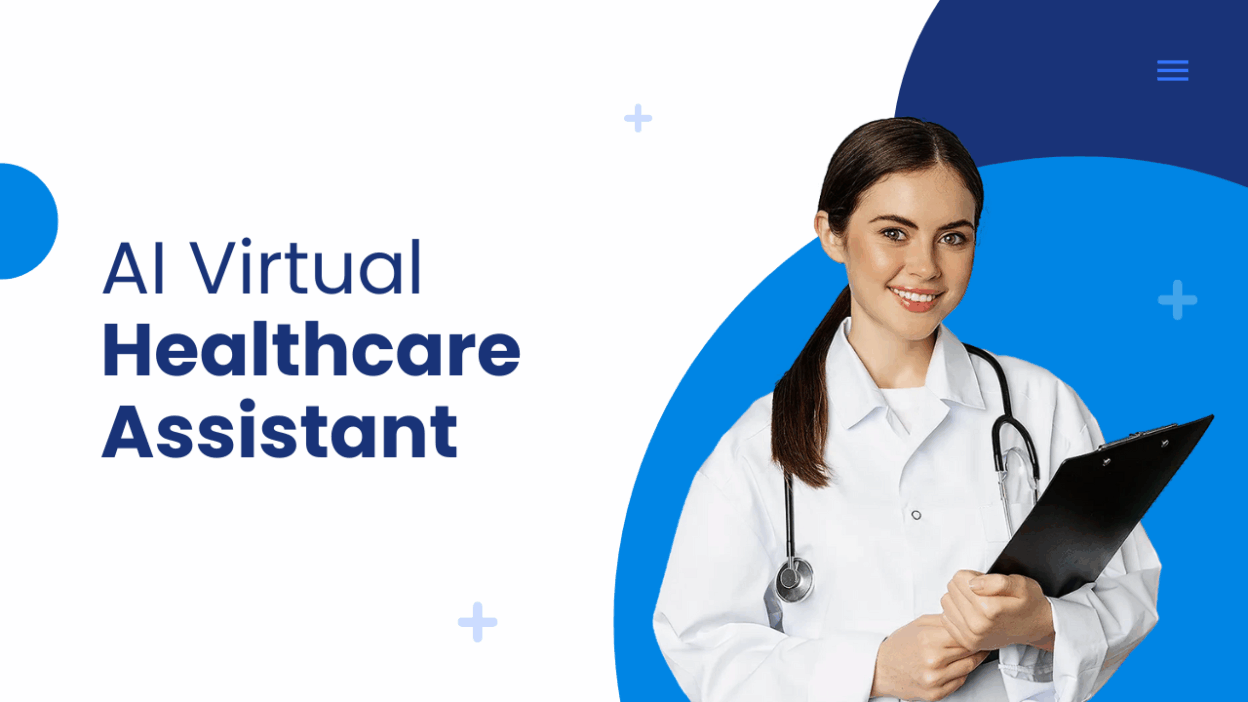

You walk into a clinic and you see an intelligent virtual assistant book appointments, update medical histories in real time, and remind patients about their prescriptions. This isn’t science fiction; it’s the reality of today’s AI Virtual Assistant in Healthcare.
The healthcare industry is undergoing digital transformation, and artificial intelligence is redefining communication between doctors, nurses, and patients. AI-powered healthcare assistants are helping healthcare organizations streamline processes, improve patient outcomes, and reduce administrative workloads.
What Is an AI Virtual Assistant in Healthcare?
An AI Virtual Assistant in Healthcare is an intelligent system designed to assist medical professionals and patients through voice or chat interfaces. These assistants use Natural Language Processing (NLP) and Machine Learning (ML) to understand queries, provide accurate responses, and automate tasks.
They can:
- Schedule and manage appointments
- Answer patient queries
- Provide medication reminders
- Retrieve electronic health records (EHRs)
- Support telemedicine consultations
This blend of automation and personalization makes healthcare more efficient, accessible, and patient-centric.
How AI Virtual Assistants Are Transforming Doctor-Patient Communication
Doctor-patient communication is at the heart of quality healthcare. However, time constraints, administrative burdens, and growing patient volumes often make meaningful engagement difficult. AI bridges this gap by enabling real-time, responsive, and data-driven communication.
1. 24/7 Patient Support
Unlike human staff, AI virtual assistants never take breaks. They provide around-the-clock assistance, answering routine questions, checking symptoms, and guiding patients toward appropriate care.
For example, if a patient messages at midnight about medication side effects, the AI assistant can respond instantly — offering immediate guidance or suggesting when to contact a doctor.
2. Simplifying Appointment Management
Gone are the days of long hold times on phone calls. Patients can now schedule, reschedule, or cancel appointments within seconds using voice or chat assistants.
For hospitals and clinics, this automation means fewer no-shows and more streamlined scheduling — saving both time and resources.
3. Personalized Patient Engagement
AI assistants use data analytics to deliver personalized communication, from follow-up reminders to tailored health tips. This continuous engagement keeps patients informed and motivated to follow treatment plans, ultimately improving health outcomes.
For chronic disease management, such as diabetes or hypertension, these reminders can be life-saving.
4. Streamlining Doctor Workflows
Administrative overload is one of the biggest challenges in healthcare. AI assistants automate routine documentation, appointment confirmations, and patient inquiries — freeing up doctors to focus on patient care.
According to studies, clinicians spend nearly 50% of their time on paperwork. AI assistants drastically reduce this, helping improve productivity and reduce burnout.
5. Enhancing Telemedicine Experience
As telehealth continues to expand, AI virtual assistants are playing a crucial role in patient onboarding, verifying insurance details, and preparing reports before virtual consultations.
They act as digital receptionists — making the telemedicine journey seamless from start to finish.
Key Benefits of AI Virtual Assistants in Healthcare
Implementing AI-powered assistants brings measurable benefits for both patients and healthcare providers.
Improved Communication: Faster, clearer, and more consistent interactions.
Operational Efficiency: Reduced manual work for staff and fewer administrative errors.
Better Patient Experience: Personalized support builds trust and satisfaction.
Cost Reduction: Lower overhead costs and optimized staff utilization.
Enhanced Accessibility: Patients in remote areas can access instant virtual assistance.
The impact is undeniable — healthcare organizations that leverage AI are achieving higher patient retention and smoother operational workflows.
Real-World Applications of AI Virtual Assistants in Healthcare
Here’s how healthcare facilities are already putting AI assistants to work:
- Hospitals & Clinics: Managing appointments, patient queries, and digital check-ins.
- Pharmacies: Sending refill reminders and prescription updates.
- Insurance Providers: Assisting with claims, coverage details, and policy questions.
- Mental Health Platforms: Offering emotional support and guided therapy sessions.
These applications demonstrate how AI Virtual Assistant in Healthcare is not just a trend — it’s an essential tool for modern, patient-centered healthcare delivery.
AI Virtual Assistants and Data Privacy
A major concern in healthcare technology is data security. Virtual assistants must comply with global regulations such as HIPAA (Health Insurance Portability and Accountability Act) to ensure patient data is protected.
Modern AI assistants use end-to-end encryption, role-based access control, and anonymization to secure sensitive health information. At Ab Ark Private Limited, we prioritize ethical AI development that aligns with the highest standards of data privacy and transparency.
The Future of AI Virtual Assistants in Healthcare
Looking ahead, AI Virtual Assistants will evolve from simple chatbots into proactive health companions capable of:
- Predicting patient needs using AI analytics
- Assisting doctors during diagnosis with voice-guided data
- Providing multilingual support for diverse patient populations
- Integrating with wearable health devices for real-time monitoring
This convergence of AI, IoT, and predictive analytics is set to revolutionize how healthcare communication and decision-making happen.
How Ab Ark Private Limited Empowers Healthcare with AI
At Ab Ark Private Limited, we specialize in building intelligent AI solutions that transform industries. Our expertise in Artificial Intelligence, Machine Learning, and Digital Transformation enables healthcare providers to implement smart virtual assistants tailored to their needs.
Whether you’re looking to develop a patient-focused chatbot, automate telehealth workflows, or enhance medical data analysis, Ab Ark’s AI development team can bring your vision to life.
Explore our AI Development Services to discover how we can help your organization innovate faster.
FAQs
- What is te role of an AI virtual assistant in healthcare?
It helps manage appointments, answer patient queries, automate administrative tasks, and improve overall doctor-patient communication. - Are AI assistants replacing human staff in hospitals?
No, they complement healthcare staff by handling repetitive tasks and allowing professionals to focus on clinical care. - Can AI virtual assistants integrate with existing hospital systems?
Yes, they can seamlessly connect with EHR systems, telehealth platforms, and CRMs for unified data management. - What are the benefits of using AI assistants for patients?
Faster responses, personalized communication, 24/7 availability, and easier access to healthcare information.
The future of healthcare communication is intelligent, connected, and patient-focused. With the integration of AI Virtual Assistants in Healthcare, medical institutions can deliver better experiences, reduce operational burdens, and improve care outcomes.
If your organization is ready to embrace AI-driven innovation, connect with Ab Ark Private Limited today. Let’s build the next generation of healthcare communication together.