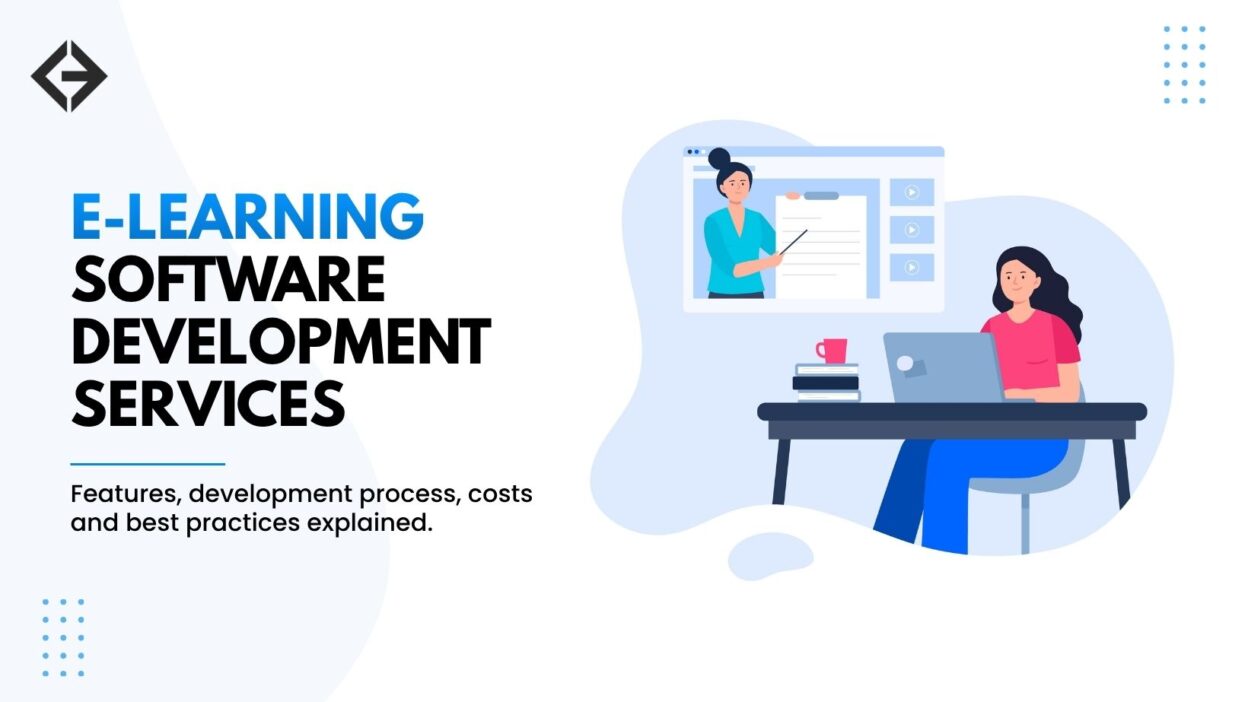
E-learning software development covers building custom learning platforms, LMS systems, and course delivery tools instead of renting per-seat licenses from off-the-shelf vendors. AB Ark delivers this through full-stack software development services, with 2026 project costs ranging from $15,000 for a basic MVP to $300,000+ for an enterprise LMS.
Key Takeaways:
- Basic e-learning MVPs cost $15,000 to $50,000; enterprise LMS platforms with AI and compliance run $150,000 to $300,000+.
- The global LMS market hit $34.1 billion in 2026, projected to reach $123.8 billion by 2033.
- Content production, not software, is often the larger budget line, at roughly $10,000 to $20,000 per finished training hour.
- Custom builds break even against per-user SaaS licensing at 3 to 4 years for organizations over 5,000 users.
- AB Ark built Vocaliv, an AI-powered platform helping training institutes scale course delivery without scaling headcount.
🔧 Talk to Our Team About Your Project
Why Companies Move Off Off-the-Shelf LMS Platforms
Off-the-shelf platforms like Canvas, Moodle, or Blackboard charge per active user, typically $30 to $50 annually. For an organization with 10,000 learners, that’s $300,000 to $500,000 a year in licensing alone, and $1.5 to $2.5 million over five years for software you never own.

Custom development flips that model: higher upfront cost, no recurring per-seat fee, and a platform shaped around your actual workflow instead of a vendor’s generic feature set. The crossover point where custom development pays for itself sits around three to four years for organizations above 5,000 users. Below that scale, a SaaS LMS is usually still the smarter call.
What E-Learning Software Development Actually Includes
- Course and content management: with structured modules, media, and progress tracking
- Assessment and quiz engines: ranging from simple knowledge checks to adaptive testing logic
- Multi-role user management: across students, instructors, parents, and administrators
- Compliance architecture: for SCORM, xAPI, GDPR, FERPA, and WCAG accessibility standards
- Video infrastructure: supporting streaming, recorded lessons, and increasingly live classes
- AI personalization: for adaptive learning paths and automated content or quiz generation
Costs climb fastest when a platform needs live streaming, offline learning support, complex admin panels, or integration with existing HR or CRM systems, since each of these adds architecture, not just interface work.
2026 Cost Benchmarks by Platform Tier
| Tier | Scope | Typical Cost | Timeline |
| Basic MVP | Course catalog, login, simple quiz, payment | $15,000 – $50,000 | 2 – 4 months |
| Mid-complexity platform | Multi-role access, assessments, certificates | $50,000 – $120,000 | 4 – 6 months |
| Advanced build | AI personalization, live classes, gamification | $120,000 – $250,000 | 6 – 9 months |
| Enterprise LMS | Multi-tenancy, compliance, deep integrations | $150,000 – $300,000+ | 9+ months |
Healthcare and regulated-industry training platforms run higher still, often $60,000 to $180,000+, because audit trails, secure access, and certification tracking add architectural weight beyond a standard course-based product.
💡 Get a Custom Project Cost & Timeline Estimate
The Cost Nobody Puts on the Software Quote
The software is often the cheaper half of an e-learning budget. Content production, courses, video, assessments, and keeping them current, typically costs $10,000 to $20,000 per finished hour of training material.
Add institutional requirements most software quotes leave out entirely: accessibility conformance, student data privacy handling, and integrations schools or enterprises demand as a condition of adoption. Budgeting the platform without budgeting the content and compliance layer is the single most common way e-learning projects blow past their estimate.
Build vs Buy: A Framework, Not a Feature List
A serious LMS budget should not start with a feature wishlist. It should start with the business model, because an internal training portal, an EdTech product, a healthcare compliance platform, and a multi-tenant SaaS LMS each need fundamentally different architecture, permissions, and reporting underneath.
Decide who buys your platform and what you’re actually teaching before pricing anything. A phased approach, core features live first, AI and advanced features layered in once usage validates the model, keeps initial investment controlled while your revenue funds what comes next.
For teams evaluating whether to staff this build internally or bring in an external team for the harder architectural decisions, our guide on software development staff augmentation breaks down how embedded external engineers can move a platform like this from architecture to launch faster than an internal hire alone.
How AB Ark Builds E-Learning Platforms in Production
AB Ark partnered with Vocaliv to help training institutes scale course delivery without scaling headcount. The platform delivered AI-powered lesson planning, voice-based content creation, automated quizzes, and 24/7 student support, replacing the manual trainer workload that caps how many learners an institute can serve at once. This is the outcome a well-scoped e-learning build is supposed to produce: not just a course catalog with a login screen, but a system that removes the operational bottleneck standing between an institute and its growth. Across the wider portfolio, AB Ark maintains 99 percent job success across 15,000+ working hours and 300+ clients, delivered by an 80-person engineering team operating from the UAE, USA, and Pakistan.

Frequently Asked Questions
How much does e-learning software development cost in 2026?
Costs range from $15,000 for a basic MVP to $300,000+ for an enterprise LMS with AI personalization and compliance features. Mid-complexity platforms with multi-role access and assessments typically run $50,000 to $120,000.
Is a custom LMS cheaper than an off-the-shelf platform long-term?
For organizations above roughly 5,000 users, custom development typically breaks even against per-seat SaaS licensing within 3 to 4 years, then continues saving afterward since there’s no recurring per-user fee.
What drives e-learning development costs beyond the base platform?
Content production often costs more than the software itself, at roughly $10,000 to $20,000 per finished training hour. Compliance requirements like GDPR, FERPA, and WCAG, along with third-party integrations, also add significant cost beyond a standard course-based build.
How long does it take to build a custom e-learning platform?
A basic MVP takes 2 to 4 months. Mid-complexity platforms take 4 to 6 months, and advanced builds with AI personalization or live classes typically take 6 to 9 months or longer.
Ready to Build
The software is rarely where an e-learning budget actually breaks. It breaks in unplanned content production, compliance requirements discovered mid-build, and architecture chosen for the wrong business model. AB Ark scopes all three before writing a line of code.
📞 Schedule a Free Consultation Call

Head Of Product