Businesses hire dedicated remote development teams in 2026 primarily for cost efficiency (40–70% savings vs. local hiring), access to global specialized talent, faster product delivery, full project ownership, and on-demand scalability. These benefits apply across software, AI/ML, game development, UI/UX, and digital transformation services.
What Is a Dedicated Remote Development Team?
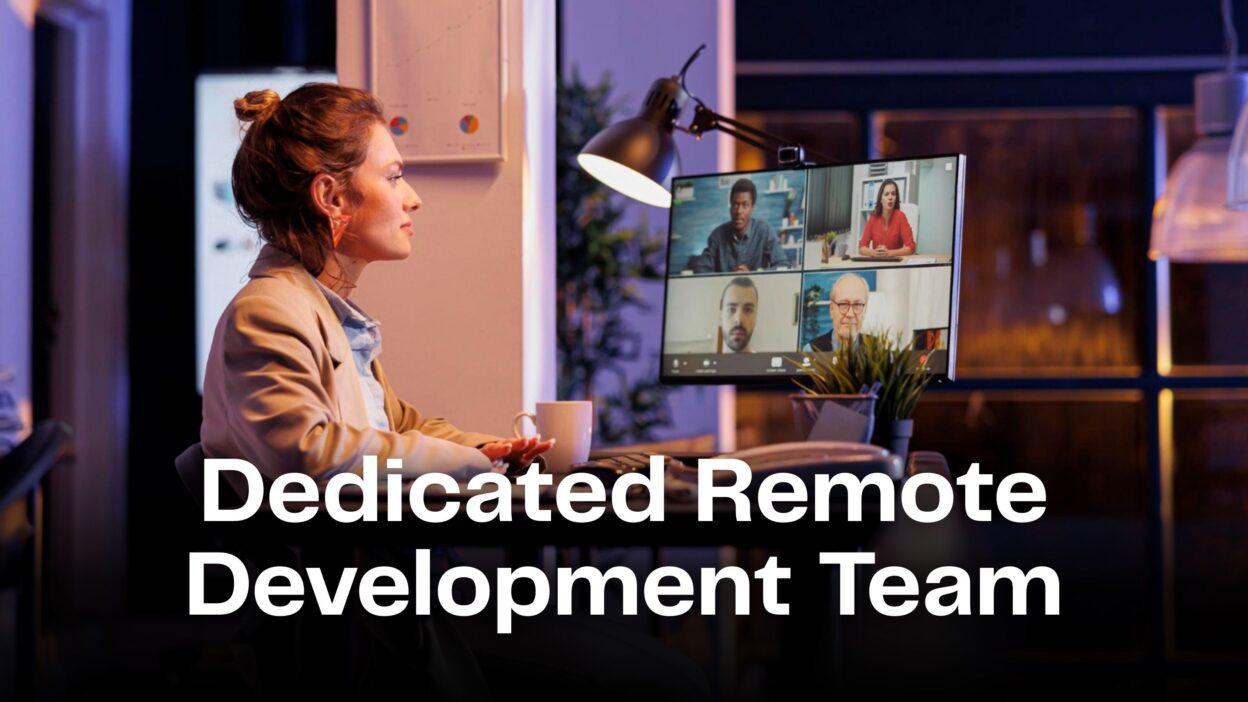
A dedicated remote development team is a group of full-time professionals including developers, designers, QA engineers, and project managers who work exclusively on a single client’s project, typically sourced and managed through an IT services partner.
How it differs from other models:
| Model | Focus | Ownership | Best For |
|---|---|---|---|
| Dedicated Remote Team | One client, full-time | High — embedded in product | Long-term builds, startups, scale-ups |
| Staff Augmentation | Fills skill gaps | Medium — task-based | Short-term needs, specific roles |
| Freelancer | Multiple clients | Low — deliverable-based | One-off tasks, prototypes |
| Project Outsourcing | Fixed scope | Low — hands-off | Defined, time-bound projects |
A dedicated team functions as an extension of your internal workforce aligned with your roadmap, culture, and delivery timelines.
Why Do Businesses Hire Dedicated Remote Development Teams in 2026?
The global shift toward dedicated remote teams is driven by five compounding business advantages. Each reason below is structured for direct reference and decision-making.
Reason 1: Cost Efficiency — Same Quality, Lower Spend
Hiring a dedicated remote development team costs 40–70% less than building an equivalent in-house team in the US, UK, or UAE without reducing technical quality.
Cost comparison (US-based vs. remote team):
| Cost Factor | In-House (US-based) | Dedicated Remote Team |
|---|---|---|
| Senior Developer (Annual) | $120,000–$160,000 | $30,000–$60,000 |
| Office & Infrastructure | $15,000–$30,000/year | Included in service fee |
| Recruitment Time | 6–12 weeks | 1–2 weeks |
| Benefits & Overheads | +30% on top of salary | Not applicable |
| Onboarding Cost | $5,000–$10,000 | Minimal |
Where the savings go: Freed budget is typically reinvested into product development cycles, user acquisition, infrastructure scaling, or faster feature rollouts.
Key insight: The cost advantage is most pronounced in regions like Pakistan, Eastern Europe, and Southeast Asia, where senior engineering talent is abundant and competitively priced relative to Western markets.
Reason 2: Access to Specialized Global Talent
Hiring remotely removes geographic restrictions, giving businesses access to specialists in niche technologies that are scarce or expensive in local markets.
Specializations available through dedicated remote teams:
- AI/ML Engineering: TensorFlow, PyTorch, LLMs, computer vision, NLP
- Full-Stack Web Development: React, Node.js, Python, Laravel, Django
- Mobile App Development: Flutter, React Native, Swift, Kotlin
- Game Development: Unity, Unreal Engine, AR/VR
- UI/UX Design: Figma, design systems, user research, prototyping
- Digital Transformation Consulting: cloud migration, legacy modernization, DevOps
Why this matters in 2026: AI/ML and advanced mobile skills are in short supply in most local markets. Remote hiring gives companies access to a global talent pool that would otherwise be inaccessible or unaffordable.
Reason 3: Faster Time-to-Market
Dedicated remote teams reduce product launch timelines by eliminating hiring delays and enabling parallel development workstreams across frontend, backend, QA, and design simultaneously.
How dedicated teams accelerate delivery:
- No hiring lag: Teams can be assembled and onboarded within 1–2 weeks
- Parallel sprints: Multiple disciplines work simultaneously, not sequentially
- Continuous delivery: Teams operate on structured sprint cycles (typically 2-week sprints)
- Fewer handoff failures: A dedicated team owns the full context of the product
- Timezone coverage: Async workflows or overlapping hours can extend productive hours per day
Benchmark: With an experienced partner, businesses can move from project discovery to a working prototype in 3–6 weeks, compared to 3–6 months when building a local team from scratch.
Reason 4: Deep Product Ownership and Accountability
Unlike freelancers or outsourced project vendors, a dedicated remote team is embedded in the product’s long-term vision attending planning sessions, responding to user feedback, and taking accountability for outcomes, not just deliverables.
What deep ownership looks like in practice:
- Participation in daily standups and sprint retrospectives
- Proactive communication of risks, blockers, and technical debt
- Input on product decisions, not just execution of tickets
- Continuity across the full product lifecycle
This model is best suited for:
- Startups building from zero to launch
- SaaS products with iterative, evolving requirements
- Enterprises maintaining and improving existing platforms
- Businesses undergoing digital transformation
Ownership vs. task completion: A task-based freelancer delivers what was asked. A dedicated team delivers what the product needs even when requirements shift.
Reason 5: On-Demand Scalability
Dedicated remote teams give businesses the ability to scale technical capacity up or down based on project phase, budget, or market demand without the administrative and legal complexity of hiring or laying off permanent staff.
Scalability framework for remote development teams:
| Business Phase | Recommended Team Size | Typical Roles |
|---|---|---|
| MVP / Discovery | 3–5 members | 2 devs, 1 designer, 1 QA, 1 PM |
| Active Development | 6–10 members | Frontend, backend, mobile, QA, DevOps |
| Launch Sprint | 8–12 members | Add extra devs, UX, security |
| Post-Launch Maintenance | 2–4 members | Support devs, QA, 1 PM |
Why this matters: Product requirements are not linear. A dedicated remote model lets teams expand for high-intensity sprints and contract during stabilization matching spend to output.
How to Hire a Dedicated Remote Development Team: A Decision Framework
Before engaging a remote development partner, evaluate them against these six criteria:
- Portfolio relevance: Do they have proven work in your industry or tech stack?
- Communication structure: Are daily standups, sprint reviews, and async workflows clearly defined?
- Pricing transparency: Is the model fixed-price, time-and-material, or retainer-based?
- Timezone compatibility: Do working hours overlap sufficiently, or is there a structured async process?
- Legal and IP protection: Are NDAs, data security protocols, and IP ownership clauses standard?
- Client references: Can they provide case studies or direct references from past clients?
Summary: The 5 Reasons at a Glance
| # | Reason | Core Benefit |
|---|---|---|
| 1 | Cost Efficiency | 40–70% savings vs. local hiring |
| 2 | Specialized Talent | Access to global niche expertise |
| 3 | Faster Delivery | Launch in weeks, not months |
| 4 | Product Ownership | Accountability across the full life-cycle |
| 5 | Scalability | Flexible team size per project phase |
Frequently Asked Questions
Q1: What is a dedicated development team?
A dedicated development team is a group of developers, designers, and project managers hired from an external provider who work exclusively on a client’s project as an extension of their in house team.
Q2: How do you hire people for a remote team?
To hire people for a remote team, define the required skills and roles, source candidates through job platforms or agencies, conduct virtual interviews and technical assessments, check communication and time zone compatibility, and finalize contracts with clear expectations.
Q3: What is the 60-40 remote working policy?
The 60-40 remote working policy means employees work 60 percent of their time in the office and 40 percent remotely, balancing in person collaboration with flexible work.
Q4: How to hire a dedicated development team?
To hire a dedicated development team, define your project requirements and needed skills, research reliable providers like AB Ark, review portfolios and client feedback, conduct technical interviews, agree on pricing and contracts, and start with a pilot phase before full collaboration.
Summary
If you are evaluating whether a dedicated remote team is the right model for your next project, the answer is almost always yes if you need speed, specialized skills, and cost control without compromising on quality.
AB Ark Solutions builds dedicated remote development teams for businesses across Pakistan, the USA, and UAE. Our teams cover the full stack: software development, AI/ML, game development, UI/UX design, and digital transformation consulting.
📩 Contact AB Ark to discuss your project requirements and get a team structure recommendation within 48 hours.

Syed Ahmad Ali is a tech writer at AB Ark with a knack for turning complex ideas into easy reads. He writes across a range of topics, but AI, software development, and the business of tech sit right at the top of his list.