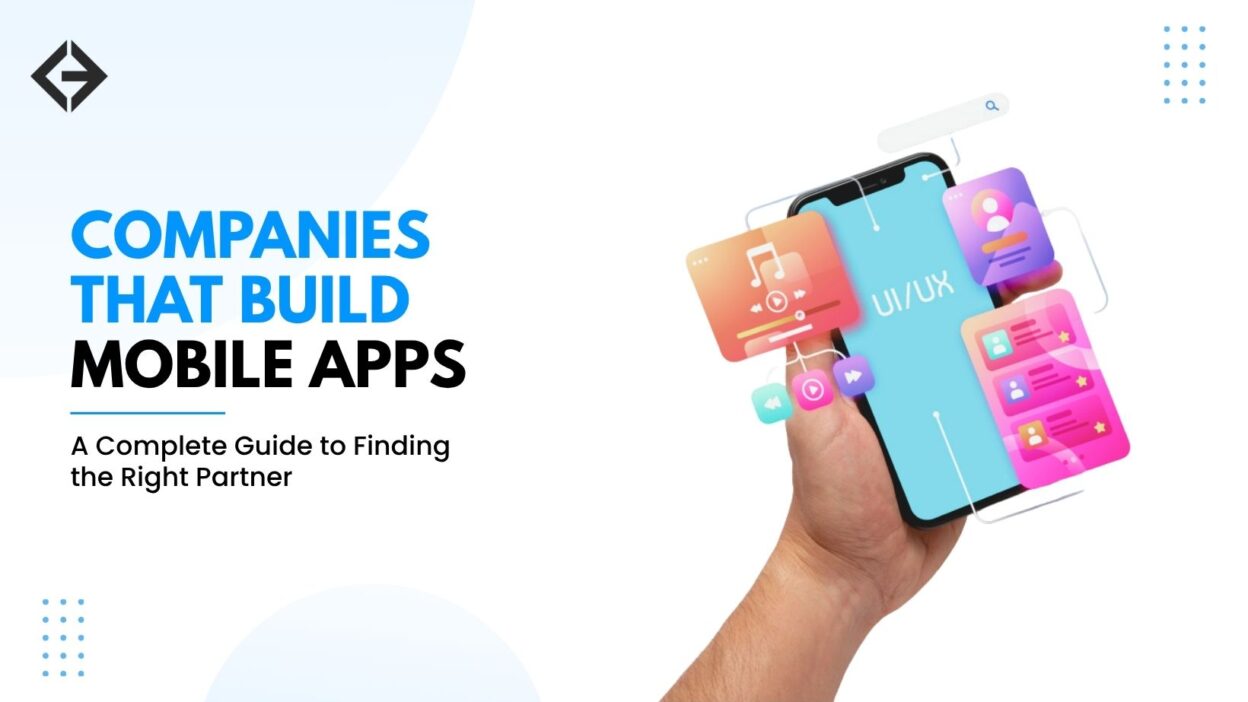
Companies that make phone apps range from large agencies to specialized boutiques and offshore teams, and choosing the right one to build a custom mobile solution depends on domain expertise, transparent pricing, and evidence of what they have actually shipped, not portfolio polish. Simple apps run $15,000-$25,000; complex, AI-integrated apps can exceed $80,000.
Key Takeaways:
- The mobile app market is on track to generate roughly $600 billion in revenue in 2026, and thousands of companies compete for that business.
- Choosing the wrong app development company can cost six figures and six months; the wrong choice is far more common than most first-time buyers expect.
- Domain specialization matters more than generalist experience for regulated industries: a healthcare app builder already understands HIPAA and clinical workflows a generalist would learn on your budget.
- Cross-platform frameworks like React Native and Flutter cut development costs by 30-50% versus building separate native apps for iOS and Android.
- Evidence over promises is the single best filter: what a company has shipped predicts outcomes far better than what they say they can do.
Choosing a company to build your phone app looks simple until the wrong choice costs six figures and six months. There are thousands of agencies, freelancers, and offshore teams competing for the same business, and most of them look identical on a landing page. The real challenge is not finding a company that makes phone apps; it is identifying the one that will actually deliver, stay within budget, and still answer your calls after launch.

What Kind of Company Actually Builds Your App
“Companies that make phone apps” is a broad category covering several genuinely different business models. Full-service agencies handle design, development, and post-launch support under one roof. Specialized boutiques focus deeply on one platform, industry, or technology (healthcare apps, fintech, AI-powered products). Offshore and hybrid teams offer significant cost savings with strong technical depth, provided the process around communication and quality control is solid. Freelancer platforms and individual developers suit narrow, well-defined tasks but rarely offer the structured process a real product build needs.
None of these models is universally better. The right one depends entirely on your app’s complexity, your budget, and whether your domain, healthcare, finance, education, carries specific compliance requirements a generalist would need to learn on your project’s time and budget.
Why Domain Specialization Is Worth a Premium
A company that has already built ten healthcare apps understands HIPAA compliance, clinical workflow design, and EHR integration patterns by default. A generalist building its first healthcare app has to research, learn, and make the same mistakes the specialist already worked through on a previous client’s budget. That specialization commands a premium, but it is usually cheaper than the compliance failures and rework a generalist produces while learning on your project.
This logic extends beyond healthcare. Fintech apps need payment security and regulatory experience; AI-powered apps need a company that has actually shipped model integrations before, not one that is merely “confident” it can. Ask directly whether a shortlisted company has built something in your specific domain, and ask to see it.
What Building a Mobile App Costs in 2026
| App Complexity | Typical Cost | Timeline | What It Includes |
| Simple app | $15,000-$25,000 | 2-3 months | Core feature set, single platform or basic cross-platform build |
| Complex / AI-integrated app | $80,000+ | 6-9 months | Multiple integrations, AI features, custom backend, multi-platform |
| Domain-specialized (healthcare, fintech) | 20-40% premium over generalist quote | Varies by compliance scope | Regulatory compliance built into architecture from day one |
Cross-platform frameworks like Flutter and React Native cut development costs by roughly 30-50% compared with building two separate native apps, and for the majority of business apps in 2026, this is now the financially sound default rather than a compromise.
The Evaluation Framework: What Actually Predicts a Good Choice
Evidence over promises is the filter that matters most. Look at what a company has actually shipped, not what their pitch deck claims they can do, and ask for live app links you can download and test yourself, not screenshots. Read client reviews on Clutch or GoodFirms for honesty about communication and reliability, since a company’s own testimonials rarely mention the projects that went badly.
Security should come up in their pitch before you ask about it. A serious partner raises encryption, secure logins, and industry-specific compliance unprompted; if security never comes up voluntarily, that is a gap you will likely pay for later. Confirm post-launch support explicitly too, since a company that disappears after the final payment leaves you unable to fix bugs or ship updates as your app ages.
Red Flags Worth Walking Away From
Unrealistic pricing that undercuts every other quote by a wide margin usually reflects hidden trade-offs in code quality or ownership terms. Vague answers about their development process, rather than a clear explanation of discovery, design, build, and testing phases, suggest the team has not actually run this process enough times to describe it confidently. And a company unwilling to share reference clients or discuss a paid prototype test before a long-term commitment is asking you to trust promises over evidence.
Building vs. Migrating an Existing App
If you already have an app in progress and are considering switching companies mid-build, know that migration typically costs 30-50% of the original budget in lost work and ramp-up time for the new team. Testing fit early, through a small paid prototype rather than committing to a full build immediately, is far cheaper than a mid-project vendor change. Choosing carefully the first time also matters more once you know which region or market you are sourcing from, since cost structures and specialization patterns vary significantly by geography. Our complete comparison of software development companies in Pakistan covers one of the strongest cost-to-quality regions for exactly this kind of mobile app build.
What a Properly Vetted Mobile App Delivers
AB Ark’s AI-Powered Habit Tracking build shows what disciplined app development produces when the underlying process is right. The client needed an ecosystem that could track user behavior continuously and deliver personalized insights without lag as adoption scaled, exactly the kind of reliability challenge a rushed or generalist build would struggle with; AB Ark engineered a platform built for that always-on performance, transforming how users build, track, and sustain habits through intelligent design (full case study). That production-grade standard, delivered by an 80+ person team across 15,000+ working hours for 300+ clients at a 99% job success rate, is what the evaluation framework above is designed to help you find.

Frequently Asked Questions
How do I choose the right company to build a mobile app?
Evaluate companies on what they have actually shipped, not their pitch or portfolio polish, and check client reviews on Clutch or GoodFirms for honest feedback. Confirm they raise security and compliance proactively, ask for a clear development process, and request a small paid prototype before committing to a full build.
How much does it cost to hire a company to build a phone app?
Simple apps typically cost $15,000-$25,000, while complex or AI-integrated apps can exceed $80,000. Domain-specialized apps in regulated industries like healthcare or fintech often carry a 20-40% premium over a generalist quote.
How long does it take a company to build a mobile app?
Simple apps typically take 2-3 months, while advanced cross-platform or AI-powered apps take 6-9 months. Timelines extend further for apps with regulatory compliance requirements or complex third-party integrations.
What are red flags when choosing a mobile app development company?
Watch for pricing dramatically below every other quote, vague answers about their development process, and reluctance to share client references or accept a paid prototype test. A company that does not raise security proactively in its pitch is also a warning sign.
The company you choose to build your app is handing them your product vision, your budget, and often the technical foundation of your entire business. Evaluate on evidence, not promises, and the odds shift decisively in your favor.

Syed Ahmad Ali is a tech writer at AB Ark with a knack for turning complex ideas into easy reads. He writes across a range of topics, but AI, software development, and the business of tech sit right at the top of his list.