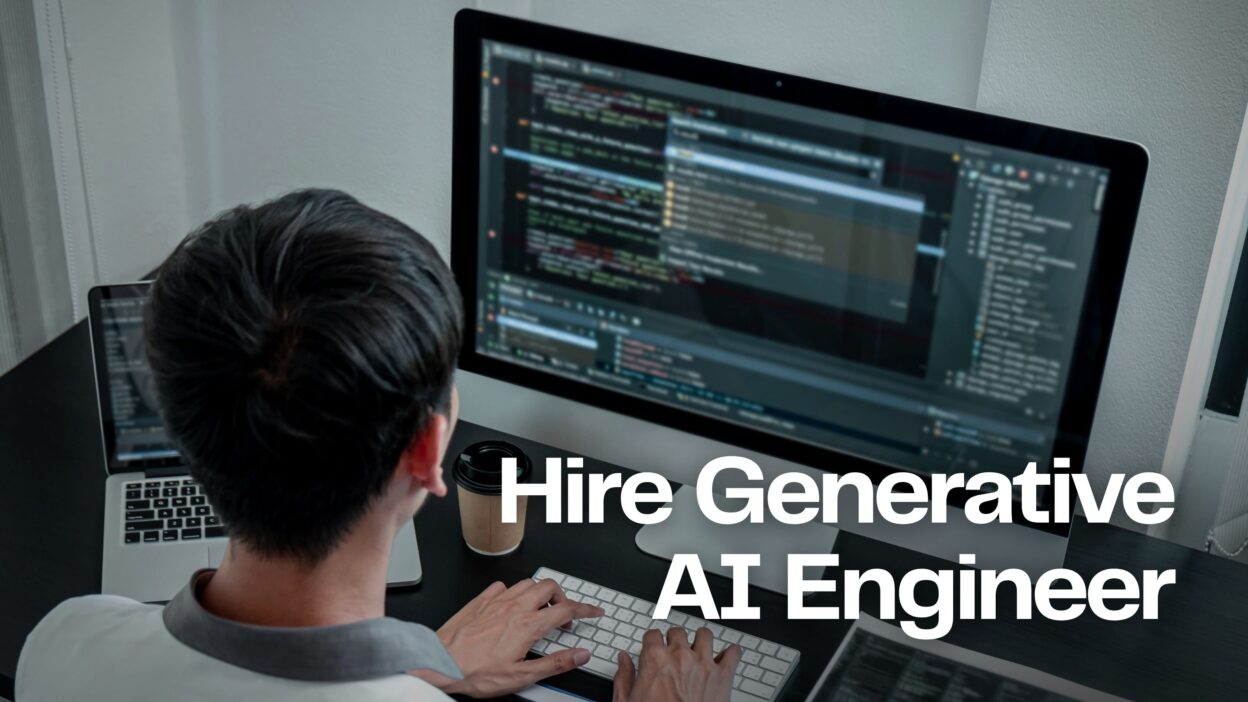
A Generative AI engineer designs, builds, and deploys AI systems that create content, automate decisions, and power intelligent products from chatbots to image generators to AI-driven workflows. Hiring one strategically can compress months of digital transformation into weeks. This guide covers what to look for, what to pay, how to hire fast, and how businesses in the US, UAE, and Pakistan are using generative AI engineers to scale in 30 days or less.
Your competitors are already using generative AI. Some are automating customer support. Others are generating product content at scale. A few are building AI-powered tools that are quietly replacing entire departments.
The gap between companies that have moved on this and companies still researching it is widening every quarter.
The single most important hire you can make right now? A generative AI engineer who can take AI from a strategy slide into a working product. Here’s everything you need to know to hire the right one fast.
What Does a Generative AI Engineer Actually Do?
A Generative AI engineer builds systems powered by large language models (LLMs), diffusion models, and other generative architectures to automate, create, and augment business processes.
This is not a prompt engineer. This is not a data scientist repurposed. A true generative AI engineer operates at the intersection of machine learning, software engineering, and product thinking.
Their core responsibilities typically include:
- LLM integration Connecting models like GPT-4, Claude, Gemini, or open-source alternatives (LLaMA, Mistral) into real applications
- RAG system development Building Retrieval-Augmented Generation pipelines that ground AI output in your company’s actual data
- Fine-tuning and model customization Adapting pre-trained models to your domain, tone, and business logic
- AI agent development Creating autonomous agents that can reason, plan, and take multi-step actions
- API and infrastructure management Ensuring AI systems are fast, reliable, and cost-efficient at scale
- Evaluation and safety frameworks Testing for hallucinations, bias, and output quality before deployment
The output isn’t a report or a recommendation. It’s a working system integrated, tested, and live.

Why Businesses Are Racing to Hire Generative AI Engineers Right Now
The numbers tell a clear story.
“The generative AI market is projected to grow from $67.18 billion in 2024 to $967.65 billion by 2032.” Fortune Business Insights, 2024
That growth is being driven by real enterprise adoption. Companies are using generative AI to cut content production time by 60–80%, reduce support ticket volume by 30–40%, and build personalized customer experiences that weren’t economically feasible two years ago.
The bottleneck is not budget. It’s not a strategy. It’s engineering talent specifically, engineers who understand both the science and the practical application of generative AI systems.
Demand for generative AI engineers has grown over 400% since 2022, while the talent pool remains limited. That’s why businesses that hire smart people do not just fast win.
What Skills Should You Look for When You Hire a Generative AI Engineer?
When hiring a generative AI engineer, prioritize hands-on experience with LLM frameworks, vector databases, and production deployment not just academic familiarity with AI concepts.
Technical Skills That Matter
| Skill Area | What to Look For |
| LLM Frameworks | LangChain, LlamaIndex, Haystack, OpenAI API |
| Model Fine-Tuning | LoRA, QLoRA, PEFT, Hugging Face Transformers |
| Vector Databases | Pinecone, Weaviate, Chroma, pgvector |
| Cloud Platforms | AWS Bedrock, Azure OpenAI, Google Vertex AI |
| Backend Engineering | Python, FastAPI, Docker, Kubernetes |
| Evaluation Tools | RAGAS, TruLens, custom evals |
Soft Skills That Are Often Overlooked
Technical depth alone isn’t enough. The best generative AI engineers also:
- Translate complex AI concepts into business-relevant language
- Work closely with product and design teams to shape user experience
- Anticipate where AI output can fail and build safeguards proactively
- Understand when not to use AI which saves significant budget
How to Hire a Generative AI Engineer in 30 Days
A structured 30-day hiring process for a generative AI engineer covers four phases: defining requirements, sourcing candidates, technical evaluation, and onboarding for immediate output.

Week 1: Define and Prepare
Before posting a job description, answer three questions:
- What specific AI capability are you trying to build? (Chatbot, content pipeline, recommendation engine, internal knowledge base?)
- What data and infrastructure do you already have?
- Do you need a full-time hire, or would a dedicated AI team deliver faster?
A vague brief attracts the wrong candidates. Specificity attracts specialists.
Week 2: Source and Screen
The best generative AI engineers are not always on job boards. Look in:
- GitHub: Search contributors to popular LLM projects and frameworks
- Hugging Face: Active community of ML practitioners with public model work
- AI-focused agencies: Managed teams of pre-vetted engineers ready to deploy
- LinkedIn: Filter by LangChain, RAG, or specific LLM platforms in skills
Screen for portfolio evidence not just resumes. Ask for links to deployed systems, GitHub repositories, or case studies with measurable results.
Week 3: Technical Evaluation
Structure your technical assessment around real tasks, not abstract puzzles.
A strong evaluation includes:
- RAG system design task: Given a document corpus, design and build a retrieval-augmented Q&A system
- LLM output evaluation: Review a set of AI outputs and identify failure modes
- Architecture discussion: Walk through how they’d approach your specific use case
Avoid algorithm-heavy coding tests. They filter for the wrong thing.
Week 4: Onboard for Impact
Set up your new generative AI engineer for fast output:
- Provide access to your data, APIs, and existing tech stack from day one
- Define the first deliverable clearly a working prototype, not a strategy document
- Assign a technical counterpart they can collaborate with directly
- Set a 30-day milestone that’s specific and measurable
How Much Does It Cost to Hire a Generative AI Engineer?
Generative AI engineer salaries vary significantly by region. Businesses hiring through managed AI service providers in cost-competitive markets like Pakistan can access senior talent at 40–60% below US market rates.
| Region | Annual Salary Range |
| United States | $140,000 – $220,000+ |
| United Arab Emirates | $90,000 – $140,000 |
| Pakistan (via managed provider) | $40,000 – $75,000 |
| Remote via AI Agency | $60,000 – $110,000 |
The cost difference is significant. But the more important question is value per dollar. A senior generative AI engineer in Pakistan working through a managed services model can deliver the same output as a US-based hire at a fraction of the total engagement cost.
Should You Hire a Freelance Generative AI Engineer or a Dedicated AI Team?
For most business use cases, a dedicated generative AI team delivers faster results, better continuity, and lower risk than a solo freelance hire.
| Factor | Freelance Engineer | Dedicated AI Team |
| Speed to start | Fast | Fast (if pre-vetted) |
| Continuity | Risk if they leave | Built-in redundancy |
| Full-stack capability | Limited to one skill set | Covers ML, backend, DevOps |
| Accountability | Variable | Contractual |
| Cost | Lower upfront | Better value long-term |
If you’re building a one-time integration, a freelancer may work. If you’re building an AI capability that becomes core to your product, a dedicated team is the safer, smarter choice.
What Industries Benefit Most from Hiring a Generative AI Engineer?
Generative AI engineering is not limited to tech companies. Industries seeing the highest ROI from dedicated AI engineers include:
- E-commerce: Product description generation, personalized recommendations, AI shopping assistants
- Healthcare: Clinical documentation automation, patient query systems, diagnostic support tools
- Legal and Compliance: Contract review automation, regulatory research tools, document summarization
- Game Development: Procedural content generation, AI-driven NPC behavior, dynamic storylines
- Financial Services: Risk assessment automation, client-facing AI advisors, fraud detection systems
- Education and Training: Personalized learning platforms, AI tutors, content generation at scale
If your business produces, processes, or responds to large volumes of text, data, or media generative AI engineering has a direct application.
How AB Ark Solutions Helps You Hire Generative AI Engineers
AB Ark Solutions is a technology services company operating across Pakistan, the United States, and the UAE. Our AI and ML practice places pre-vetted generative AI engineers into dedicated team engagements moving from brief to working prototype in under 30 days.
We specialize in:
- AI and ML Engineering: LLM integration, RAG systems, fine-tuning, and AI agent development
- Software and IT Services: Full-stack platforms built to support AI-powered features
- Game Development: Generative AI applied to content, character behavior, and procedural design
- UI/UX Design: AI-aware interface design for products where the AI is front and center
- Digital Transformation Consulting: Strategy and implementation for businesses moving AI from pilot to production
Every engagement comes with direct team access, transparent reporting, and IP protections in place from day one.
Frequently Asked Questions
What is a generative AI engineer?
A generative AI engineer is a professional who designs, builds, and optimizes AI models that can create content such as text, images, code, or audio using technologies like large language models and deep learning.
What is the difference between generative AI engineer and AI engineer?
A generative AI engineer focuses on building models that create content like text, images, or code, while an AI engineer works on broader AI systems including prediction, automation, and data driven decision making.
What industries use generative AI engineering the most?
Industries that use generative AI engineering the most include technology, marketing and advertising, healthcare, finance, e-commerce, media and entertainment, education, and customer service.
Summary
Every week you wait, your competitors are shipping AI features you don’t have yet.
AB Ark Solutions can have a dedicated generative AI engineer or a full AI team working on your project within days, not months. Whether you’re building a customer-facing AI product, automating internal workflows, or integrating LLMs into an existing platform, we’ve done it before and we’ll do it right.
Book a free consultation with AB Ark Solutions and let’s map out exactly what you can build and how fast you can ship it.