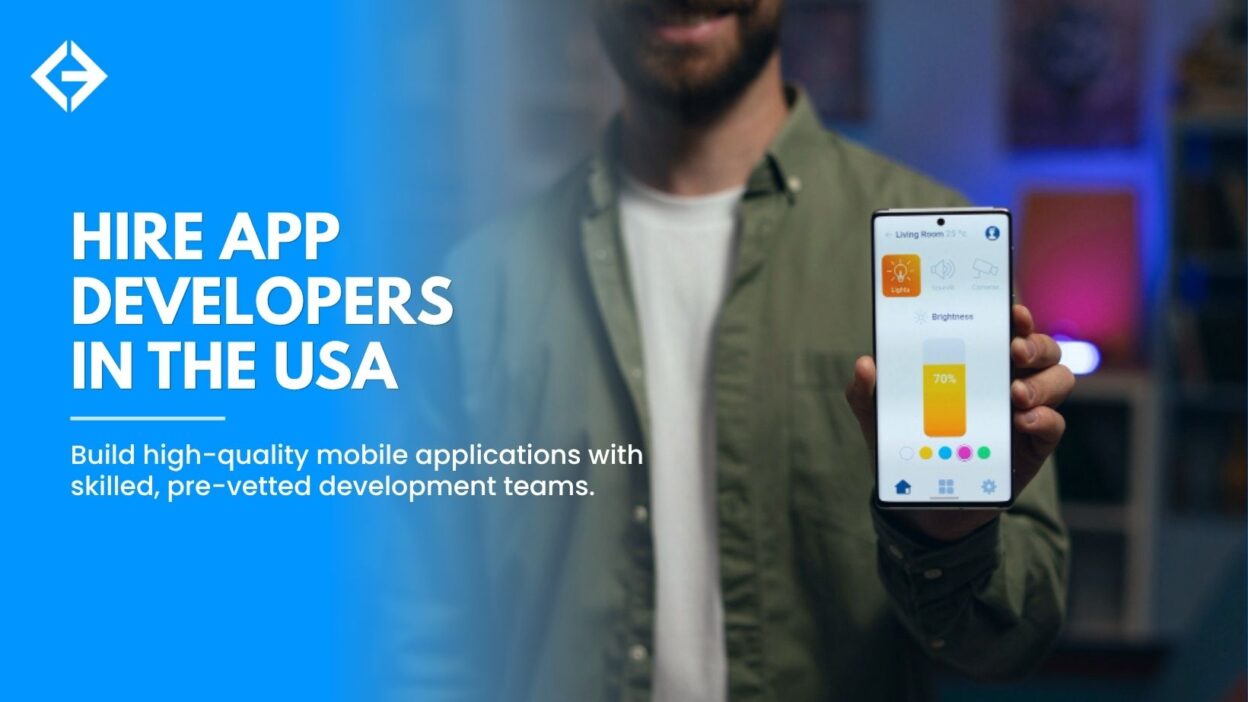
To hire an app developer in the USA, expect $80 to $200+ per hour for contract talent or $90,000 to $300,000+ annually for a full-time hire, with the final number driven by platform specialization, seniority, and whether you go direct-hire, contract, or an external development partner. AB Ark provides app development services staffed with senior engineers at a fraction of pure US onshore cost, without sacrificing the architecture quality US clients are hiring for in the first place.
Key Takeaways:
- US contract app developers run $55 to $225/hour; full-time hires cost $90,000 to $300,000 once benefits and recruiting are included.
- “App developer” is not one job. iOS, Android, cross-platform, and backend-integration specialists price and perform differently.
- Fintech and healthcare apps carry a 20 to 30 percent premium over general apps due to compliance requirements.
- Post-launch maintenance consumes 15 to 25 percent of the initial build cost annually, a line item most quotes omit.
- AB Ark has delivered production apps for US clients across 300+ engagements at 99 percent job success.
🔧 Talk to Our Team About Your Project
Why US App Developer Rates Are What They Are
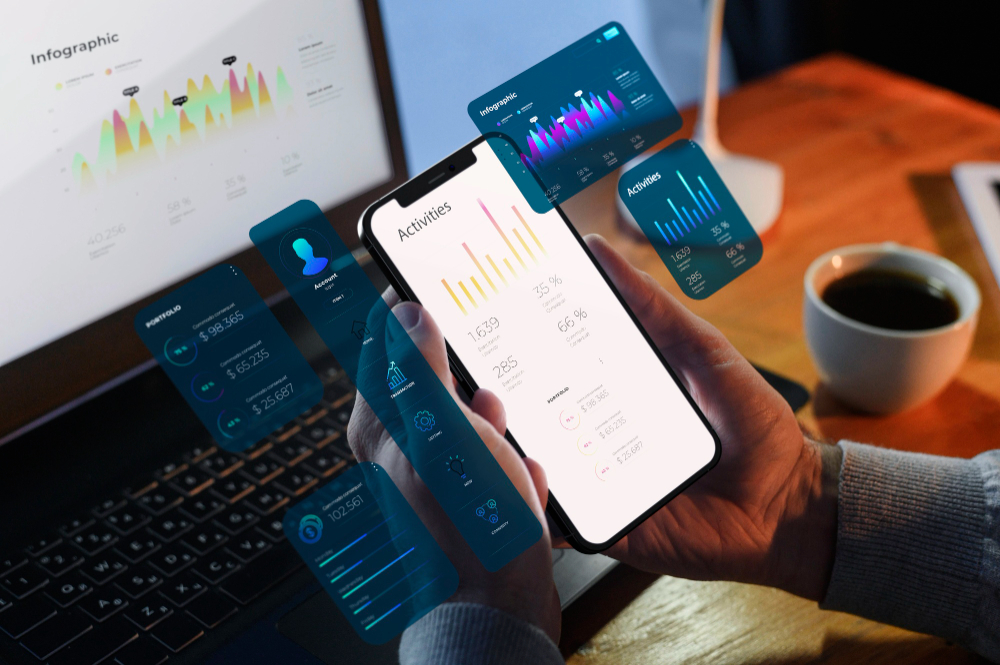
US app developer rates sit at the top of the global market because of cost of living, demand for scarce senior talent, and a mature IT sector where clients pay for lower risk, not just code output. Hiring a mobile developer in San Francisco or New York can run two to three times what an equally skilled developer costs in Poland, Brazil, or Pakistan.
That premium buys something real in many cases: same-timezone collaboration, deep familiarity with US compliance regimes, and lower communication overhead. It does not automatically buy better code. The core skill separating a strong developer from a weak one exists independently of geography, which is why hybrid staffing, US-based product ownership paired with a strong external engineering team, has become the default model for cost-conscious teams that still need US-grade output.
“App Developer” Is Four Different Jobs
- iOS specialists: working in Swift and SwiftUI, priced at a premium in the US given Apple ecosystem demand
- Android specialists: working in Kotlin, generally comparable in rate to iOS but with a wider global talent pool
- Cross-platform developers: (Flutter, React Native) pricing 10 to 25 percent below native specialists while covering both platforms from one codebase
- Backend and API engineers: who make the app’s data layer and integrations actually work, often underestimated in early hiring plans
Treating these as interchangeable is the most common budgeting mistake. A React Native generalist and a native iOS performance specialist solve different problems, and hiring the wrong one for your app’s actual technical demands costs more in rework than the rate difference would have cost upfront.
2026 US Contract Rates by Experience Level
| Experience Level | Hourly Rate | Best For |
| Junior | $50 – $85/hr | Simple features, supervised work |
| Mid-level | $75 – $145/hr | Balanced cost and independent delivery |
| Senior | $100 – $200+/hr | Architecture, complex apps, compliance-heavy builds |
| Specialist / Lead (fintech, healthcare) | $120 – $225+/hr | Regulated industries, native performance work |
Full-time US hires run $90,000 to $300,000 in year-one cost once salary, benefits, and recruiting fees (typically 15 to 25 percent of base salary through an agency) are stacked together. Contract engagements avoid that overhead but shift project management responsibility onto you.
💡 Get a Custom Project Cost & Timeline Estimate
Full Project Cost Ranges
| App Type | Typical Total Cost | Timeline |
| Simple single-feature app | $5,000 – $20,000 | 4 – 8 weeks |
| Standard business app | $20,000 – $80,000 | 10 – 16 weeks |
| Fintech or healthcare app (compliance-heavy) | $60,000 – $180,000+ | 16 – 28 weeks |
| Enterprise-grade platform | $150,000 – $500,000+ | 26+ weeks |
Fintech apps specifically carry a 20 to 30 percent premium over general apps due to PCI-DSS, SOC 2, and financial-data security requirements, translating to roughly $120 to $180 per hour for compliance-experienced US talent on that category of build.
The Hiring Model Decision
| Model | Best For | Risk Profile |
| Direct hire | Long-lived product with a permanent internal owner | Highest cost, lowest continuity risk |
| US contractor | Fixed build, backlog clearing, no added headcount | Moderate cost, variable availability |
| Nearshore/offshore team | Ongoing development at lower cost with strong process discipline | Lower cost, requires vetting for communication and architecture quality |
The most successful US companies in 2026 increasingly run a hybrid model: keep product vision, core architecture decisions, and compliance ownership in-house or with a US-based lead, while outsourcing feature development and QA to a vetted external team. That structure captures most of the cost advantage without giving up control over the decisions that actually determine long-term app quality.
Hidden Costs Most US Hiring Plans Miss
Budget 15 to 20 percent of your original build cost annually for post-launch maintenance, bug fixes, and OS compatibility updates. A $40,000 app typically needs $6,000 to $8,000 a year just to stay current.
Add ongoing infrastructure: cloud hosting, authentication services, and real-time data needs can run from $10 a month for a simple app to $500+ monthly for anything with meaningful scale. Neither of these show up in an initial development quote, and both are non-negotiable for an app with real users. To understand how the surrounding web platform and backend architecture around a mobile app get built to support this long-term cost structure, see our guide on custom web app development services before committing to a build plan.
How AB Ark Builds Apps for US Clients in Production
AB Ark built ChatRod for a client who needed a real-time conversational app engineered for responsiveness at scale, not a demo that falls apart under real usage. Our team owned architecture decisions around state management, real-time messaging infrastructure, and cross-platform delivery, the same categories that separate strong apps from expensive rewrites. This is the model US clients get when they work with AB Ark: senior architectural judgment without paying purely domestic rates for every hour of implementation work underneath it. Across the wider portfolio, AB Ark maintains 99 percent job success across 15,000+ working hours and 300+ clients, delivered by an 80-person engineering team spanning the UAE, USA, and Pakistan.
Frequently Asked Questions
How much does it cost to hire an app developer in the USA in 2026?
US contract app developers charge $55 to $225 per hour depending on experience and specialization. Full-time hires cost $90,000 to $300,000 annually once salary, benefits, and recruiting fees are included.
Is it cheaper to hire an app developer outside the USA?
Yes, typically 50 to 75 percent cheaper. Offshore developers in South and Southeast Asia charge $20 to $50 per hour for comparable seniority, though communication overlap and process discipline should be vetted carefully.
Should I hire a freelancer or an agency for my app?
Freelancers work well for simple, clearly scoped apps where you can manage the project yourself. Agencies and dedicated teams cost more per hour but provide structured delivery, QA, and project management, which matters more as app complexity grows.
What hidden costs come with hiring an app developer?
Budget 15 to 20 percent of the initial build cost annually for maintenance, plus ongoing hosting and infrastructure costs starting around $10 to $500+ per month depending on app scale.
Ready to Build
The US rate premium buys real advantages, but it doesn’t automatically buy better architecture. AB Ark delivers that same architectural discipline to US clients without the full domestic rate card attached to every hour.
📞 Schedule a Free Consultation Call

Head Of Engineering Department